
Charles Dickens sat at his desk in Devonshire Terrace on an October evening in 1843, reading sales figures for a novel that was bleeding readers. Martin Chuzzlewit, his sixth book, serialized monthly by Chapman & Hall, had peaked at 23,000 copies per installment and was dropping. His publishers invoked a clause in his contract: if sales fell further, his monthly payment of £200 would shrink by £50. His wife Catherine was pregnant with their fifth child. He could keep grinding on Chuzzlewit and hope readers came back. He could accept more speaking engagements, more editorial commissions, more of everything that paid now.
Instead, Dickens picked up a second project in the margins of the first. He began writing a Christmas ghost story nobody had asked for, composing scenes during fifteen-to-twenty-mile nighttime walks through London, returning home to put them on paper until dawn. Six weeks later, A Christmas Carol existed. The first printing of 6,000 copies sold out by Christmas Eve.
Chapman & Hall did not finance the book. Dickens paid for production himself, insisting on gilt-edged pages, hand-colored illustrations by John Leech, and red cloth binding. He set the price at five shillings. Production costs devoured the profits. Pirated editions flooded the market within weeks. The Carol earned him £230 on the first run, a fraction of what he expected.
It made him immortal.
The serialized novel demanded his hours. The Christmas story asked for something he could barely afford to give: his attention on the Carol, at the moment the Carol mattered to no one but him.
The Why
In August 1954, Dwight Eisenhower addressed the Second Assembly of the World Council of Churches at Northwestern University in Evanston, Illinois. He quoted an unnamed former college president: "I have two kinds of problems, the urgent and the important. The urgent are not important, and the important are never urgent."
Eisenhower knew the distinction from experience. As Supreme Commander of Allied Forces in World War II, he sorted thousands of decisions daily. Cables arrived every hour. Officers demanded answers. The pressure to respond to whatever burned hottest never let up. The commanders who lasted through long campaigns learned to tell the difference between signals that required action and signals that would resolve on their own while the real work continued elsewhere.
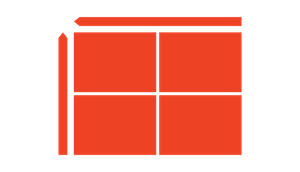
Stephen Covey turned Eisenhower's observation into a four-quadrant matrix in his 1989 book The 7 Habits of Highly Effective People. The Eisenhower Matrix plots every task on two axes: urgency and importance. Urgent tasks demand attention now. Important tasks advance your actual goals. The intersection creates four territories.

Quadrant 1: urgent and important. The gallery deadline for your strongest work, due in five days.
Quadrant 2: important, never urgent. The novel you keep meaning to start, the portfolio overhaul that could redefine your career, the skill that separates you from where you want to be.
Quadrant 3: urgent, unimportant. Most emails, most meetings, most favors people need by Friday.
Quadrant 4: neither urgent nor important. Social media scrolling, busywork, creative procrastination disguised as research.
In 2018, researchers Meng Zhu, Yang Yang, and Christopher Hsee published a study in the Journal of Consumer Research that tracked how people choose between tasks of varying urgency and importance. Across five experiments, subjects consistently chose tasks with short deadlines over tasks with larger payoffs, even when the urgent tasks were objectively worse. Zhu and her colleagues named it the mere urgency effect. The bias held even when subjects knew the important task paid more. The illusion of a ticking clock was enough to override the math.
The Eisenhower Matrix maps this damage. Most creatives occupy Quadrant 3 without knowing it. They answer the email within minutes. They attend the meeting that could have been a message. They handle the client's "quick question" that consumes an hour. Each task arrives with a short fuse and a loud voice, displacing the work that has no fuse at all: the work in Quadrant 2, where no one is asking and no deadline exists, where the only pressure comes from the creator who recognizes that this is the work that compounds over a career.
Dickens in October 1843 faced a Quadrant 1 crisis: falling income, a contracting publisher, a fifth child on the way. The daily grind pulling at his hours, the speaking engagements, the editorial commissions, the effort to prop up Chuzzlewit's sales, all lived in Quadrant 3. The story burning in his head, the one no one needed by any date, lived in Quadrant 2. He chose Quadrant 2. That choice still compounds 180 years later.